Why Can’t Congress Finally Stop Changing the Clocks?
As Americans roll back their clocks on November 1, 2026, the annual frustration highlights a stalled congressional fight over daylight saving time.


On Sunday, November 1, 2026, millions of Americans will perform a familiar, frustrating ritual. They will reach for their microwaves, oven displays, and car dashboards to wind their clocks back one hour. The annual transition back to standard time brings a brief extra hour of sleep, but it comes at a steep cost: pitch-black skies by late afternoon. This biannual disruption has triggered a fresh wave of public anger, reviving a long-stalled battle on Capitol Hill to end the clock-switching once and for all.
For years, the debate has lingered in legislative limbo. Politicians on both sides of the political aisle agree that changing the clocks twice a year is a headache. Yet, they remain deeply divided on the solution. Should the country adopt permanent daylight saving time, or should it stick to permanent standard time? This gridlock has left voters frustrated, stuck with a system established during World War I to save coal—a purpose that has long since lost its relevance.
The Legislative Deadlock and the Uniform Time Act
The modern push to change this system is led by a bipartisan coalition. Senator Marco Rubio, a Republican from Florida, has championed the Sunshine Protection Act for years. He has called the ritual of changing our clocks twice a year stupid and outdated. In 2022, the Senate shocked observers by passing his bill via unanimous consent. It seemed like the country was finally on the cusp of endless summer evenings. But the momentum died quickly.
The bill stalled in the House of Representatives, where lawmakers couldn’t agree on whether permanent daylight saving time was safe. Under the Uniform Time Act of 1966, states are allowed to opt out of daylight saving time and remain on standard time year-round. Hawaii and most of Arizona already do this. However, the law does not allow states to adopt permanent daylight saving time without an act of Congress.
This federal restriction has created a bizarre legal bottleneck. Dozens of states, including California, Florida, Oregon, and Washington, have already passed state-level laws or resolutions to stay on daylight saving time permanently. They just cannot legally implement them. They are waiting on Washington to act, and Washington is dragging its feet.
The Cautionary Tale of 1974
This is not the first time the United States has tried to abandon the clock change. In December 1973, amid an energy crisis, President Richard Nixon signed a bill enacting permanent daylight saving time on a trial basis. The experiment was wildly popular at first. Americans loved the idea of extra evening sunlight during the winter months.
Get free $1000 Amazon gift crad
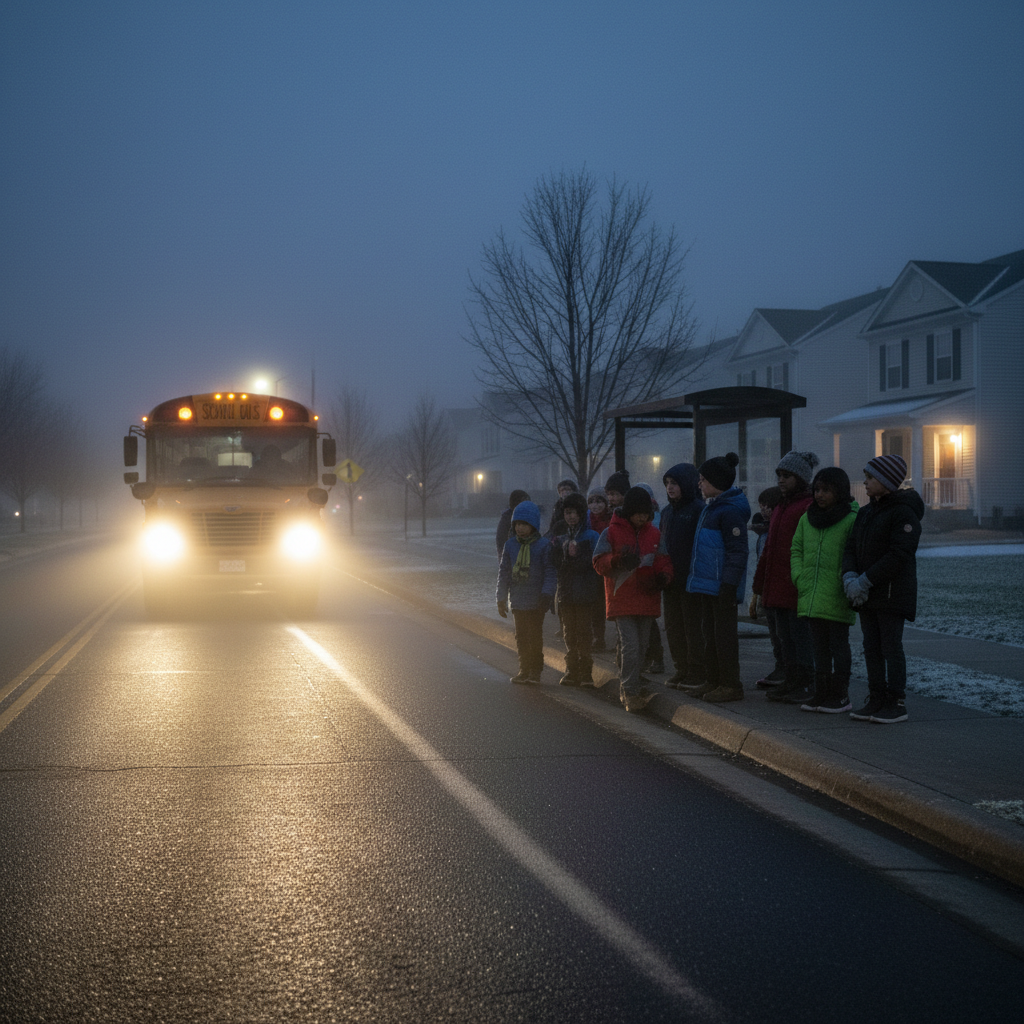
But the public mood shifted overnight once winter truly set in. By January 1974, parents were horrified to send their children to school in pitch-black conditions. In some parts of the country, the sun did not rise until nearly 9:00 a.m. After several high-profile traffic accidents involving young school children walking to bus stops in the dark, public support collapsed. Congress hastily repealed the law in October 1974, less than a year after passing it.
The Battle of Science vs. Commerce
Decades later, the debate is stuck in the exact same loop, pitting sleep scientists against the business community. The medical world has a very different view of how we should run our days. While the public loves long, sunny summer nights, organizations like the American Academy of Sleep Medicine argue that permanent daylight saving time is a bad idea.

Our internal biological clocks are wired to align with the sun. Sleep researchers explain that morning light is crucial for resetting our circadian rhythms. When we wake up in the dark, our bodies remain sluggish, leading to chronic sleep deprivation. This lack of sleep is linked to a host of health problems:
- An increased risk of heart attacks and strokes in the days following the spring change.
- A spike in fatal traffic accidents due to sleep-deprived drivers.
- A noticeable rise in seasonal depression during the dark winter months.
- Workplace injuries and lost productivity.
Conversely, the business community has its own strong opinions. Retailers, golf courses, and the tourism industry love daylight saving time. When the sun stays up later, people stay out later. They buy gas, eat at patio restaurants, and spend money. When the clocks roll back in November, these industries see an immediate dip in foot traffic. Lobbyists argue that extra evening light is a major boost for the economy, encouraging physical activity and local commerce.
Will Congress Ever Agree?
So, where does that leave us? Lawmakers are feeling the heat once again as the sun sets before 5:00 p.m. in much of the country this November. Several new compromise bills have been drafted, but none have found the magic formula to satisfy both the medical lobby and the business community.
Until a middle ground is found, Americans will have to keep adjusting their clocks. It is a minor twice-a-year inconvenience that points to a major failure in governance. Everyone wants a change, but no one can agree on how to make it happen. For now, the only certainty is that next March, the clocks will jump forward again, restarting the cycle of groggy mornings and late-night light.