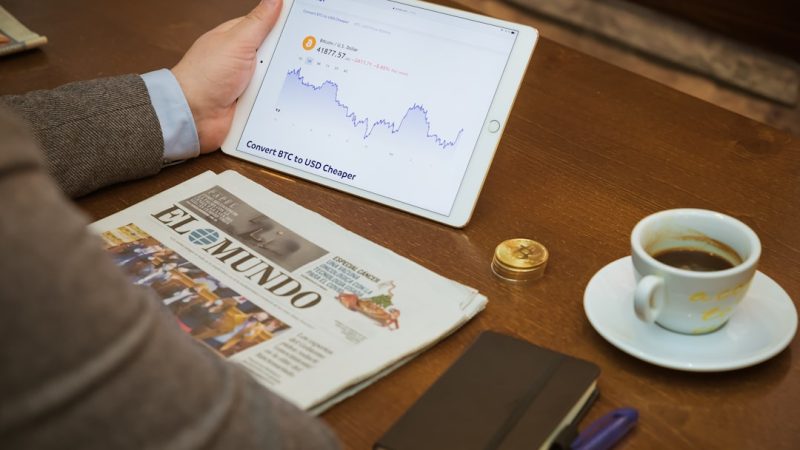
When a single Federal Reserve press conference can move global equity markets by several percentage points within minutes, the quality of information a trader consumes stops being a preference and becomes a competitive necessity. The financial markets of the 2020s are not short on data — they are drowning in it. The real challenge, increasingly, is knowing what to act on and what to ignore.
A Market Built on Milliseconds and Misreading
Modern financial markets operate at a pace that would have seemed cartoonish to the traders of a generation ago. Algorithmic systems now account for a substantial share of daily equity volume on major exchanges, executing strategies in fractions of a second based on signals derived from news feeds, earnings transcripts, and macroeconomic releases. This has created a paradox: while the infrastructure for processing information has never been faster, individual investors and smaller institutional players are routinely caught off-guard by events that, in retrospect, were entirely foreseeable.
Part of the problem is structural. Financial news has splintered across platforms — from legacy wire services to social media feeds, specialist newsletters, and real-time data terminals — with no universal standard for accuracy or timeliness. A rumour originating on a trading forum can move a mid-cap stock before any verified reporting catches up. The consequences are not trivial. Retail participation in equity markets has risen sharply since the pandemic era, bringing millions of less-experienced participants into an environment where information asymmetry is still very much alive.
The Rise of the Macro-Aware Trader
One notable shift in how serious traders approach markets is the renewed emphasis on macroeconomic literacy. For much of the low-interest-rate era following the 2008 financial crisis, equity markets were broadly forgiving of those who ignored central bank policy, currency dynamics, and global trade flows. That era is over. The rate tightening cycles of recent years, supply chain disruptions, geopolitical realignments in commodity markets, and the recalibration of US-China trade relationships have all demonstrated, repeatedly, that macro forces can override company-level fundamentals with little warning.
Traders who previously focused exclusively on technical chart patterns or earnings multiples have found themselves wrong-footed by developments in bond markets or shipping indices they had never previously tracked. Resources like trading market insights have become part of a broader information diet that macro-aware traders assemble to stay across global developments that feed into price action — whether that is central bank commentary, commodity supply data, or trade policy shifts from major economies.
This is not merely anecdotal. Across trading communities and professional networks, there is a palpable shift toward what practitioners sometimes call a “joined-up” view of markets — one that treats equities, fixed income, currencies, and commodities not as siloed asset classes but as interconnected expressions of the same underlying economic forces.
When News Becomes the Trade
The relationship between journalism and financial markets has always been complicated, but it has grown more so as the boundary between news consumer and market participant has blurred. Earnings season is the clearest example: a company can beat analyst expectations on every reported metric and still see its share price fall sharply if its forward guidance disappoints. This kind of nuanced reading — understanding not just what was said but what was implied, and how that compares to market positioning — requires a level of interpretive skill that goes well beyond simply reading a headline.
Professional traders have long employed analysts and economists to do exactly this kind of interpretive work. The democratisation of markets has created demand for similar capabilities at every level of participation. The response from the media ecosystem has been mixed. Some outlets have risen to the occasion with rigorous contextual reporting; others have defaulted to clickable volatility — breathless coverage of short-term price movements stripped of any analytical framework that might help a reader understand why they happened or what might come next.
Building Information Discipline
The traders who tend to navigate volatile environments most effectively share a common habit: they are deliberate and selective about their information sources rather than simply consuming more of everything. This means identifying a relatively small number of high-quality inputs — whether that is a specialist data service, a rigorous financial publication, or a curated set of primary sources such as central bank releases and trade data — and developing the discipline to tune out the ambient noise that fills the rest of the financial media landscape.
It also means understanding the lag between events and their market impact. Some of the most significant price moves of recent years have come not from surprise announcements but from the slow accumulation of information that was, in aggregate, pointing in a clear direction — if you knew where to look and how to read it.
That, ultimately, is the enduring challenge at the heart of financial markets. Data has never been more abundant, yet genuine insight remains scarce. The traders best positioned for the years ahead are not necessarily those with the fastest connections or the most sophisticated algorithms, but those who have learned to ask better questions of the information in front of them — starting with whether what they are reading is actually telling them something real.