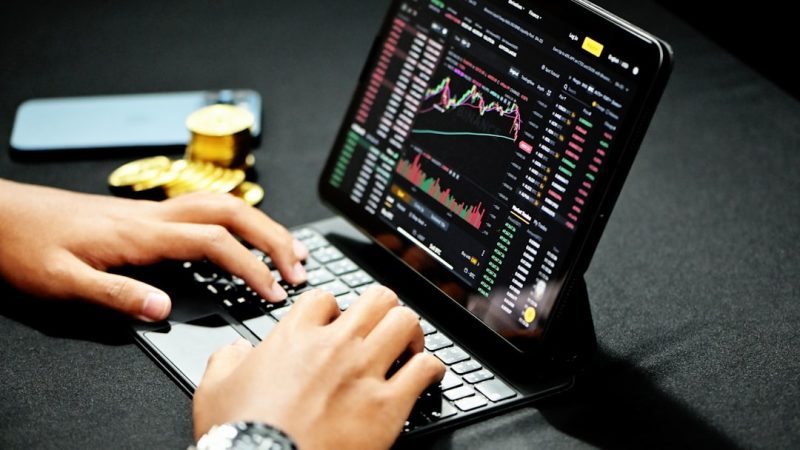
When shipping rates on the Asia-Europe corridor swung by more than 300 percent over the course of a single quarter last year, freight buyers who had been paying casual attention to market news found themselves blindsided. Those who had been tracking the underlying signals — geopolitical friction in the Red Sea, container repositioning delays, shifting demand in German manufacturing — had time to hedge, renegotiate, or simply brace. The difference between those two groups was not intelligence or resources. It was information discipline.
A Market That Never Sleeps, and Rarely Pauses to Explain Itself
Global trade has always been complex, but the speed at which complexity compounds has accelerated dramatically. Currency fluctuations in emerging markets now ripple into commodity pricing within hours. A policy announcement from the U.S. Commerce Department can reshape procurement strategies on three continents before the close of business. Central bank decisions in Tokyo, Frankfurt, and Washington are no longer isolated events — they are interlocking variables in a system that traders, analysts, and corporate treasurers must interpret simultaneously.
The volume of potentially relevant information has grown faster than most organisations’ capacity to process it. A mid-sized import business, for instance, might need to track tariff schedules, freight indices, foreign exchange rates, and sector-specific demand data all at once — and none of those streams operates on a convenient schedule. The result is a kind of permanent cognitive overhead that falls disproportionately on smaller players who lack dedicated research teams.
Why the Quality of Market Intelligence Still Varies Enormously
Despite the proliferation of financial data platforms, news aggregators, and algorithmic alert systems, genuine market intelligence remains unevenly distributed. Raw data is abundant; contextualised analysis is scarce. An alert that crude inventories have risen tells a trader very little without understanding whether that rise reflects slackening demand, a strategic reserve build, or a temporary logistics bottleneck. Getting that context quickly — and reliably — is where most information products still struggle.
This gap has fuelled demand for a new generation of trade and finance news resources that combine real-time reporting with editorial judgment. Platforms aggregating trading market insights across equities, commodities, currency markets, and macroeconomic policy have grown in influence precisely because they treat the connections between those domains as the story, rather than covering each in isolation. For practitioners who need to act on information rather than merely read it, that integrative approach represents genuine value.
The Analyst’s Dilemma: Speed Versus Depth
Professional analysts face a structural tension that has grown more acute as news cycles compress. The pressure to publish quickly — whether internally or to clients — can erode the analytical depth that makes a forecast actually useful. At the same time, waiting for complete information in a fast-moving market is its own form of failure. The most effective analysts tend to operate with a clear framework for distinguishing between noise (high-frequency price movements with no structural significance) and signal (shifts in underlying fundamentals that will persist). That framework, more than any single data source, is what separates reliable market judgment from expensive guesswork.
Global Trade Policy: The Variable That Quantitative Models Keep Getting Wrong
One of the most consistent failures in trade and financial forecasting over the past decade has been the underestimation of political risk. Quantitative models are built on historical data and therefore struggle with discontinuities — events that fall outside the distribution of past outcomes. Brexit, the successive rounds of U.S.-China tariff escalations, and the weaponisation of export controls on advanced semiconductors all had precedents in economic history, but their precise timing, scope, and second-order effects proved nearly impossible to model with confidence.
What qualitative, on-the-ground reporting can offer — and what data feeds alone cannot — is a reading of political intent and institutional dynamics. Understanding why a trade policy is being pursued, not just what it says on paper, often determines whether its market impact will be sharp and brief or slow and structural. This is one reason why the appetite for well-sourced trade journalism, as distinct from financial data services, has remained strong even as automated tools have taken over many routine analytical tasks.
The businesses and investors navigating today’s trade environment are, in a sense, back where markets have always been: making decisions under uncertainty, with incomplete information, against a clock. What has changed is that the penalty for poor information hygiene — for confusing volume with quality, or speed with insight — is steeper than it has ever been. Those who developed the discipline to distinguish genuine signal from ambient noise before the volatility arrived were the ones who still had options when it mattered. That lesson, at its core, is as old as commerce itself.