Keeping the Learjet 60 Flying: How MROs Solve Parts Shortages
Five years after Bombardier retired the Learjet, independent MROs are using teardowns and custom engineering to keep the iconic Learjet 60 flying.

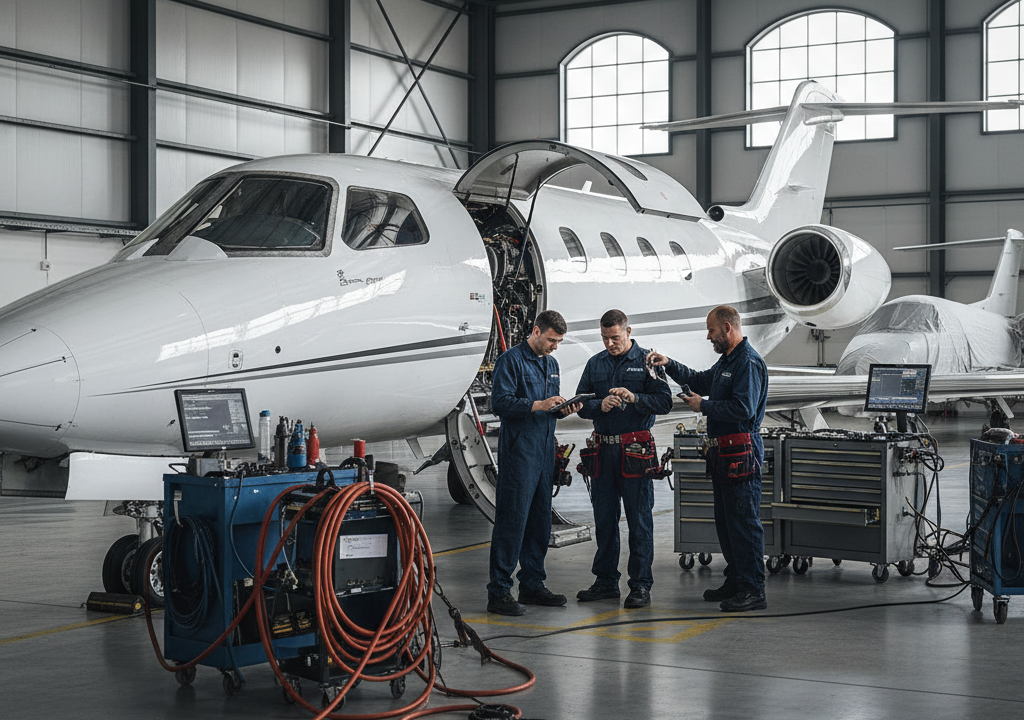
The Legacy of a Midsize Rocket
It is fast. It climbs like a rocket. For decades, the Learjet 60 was the darling of the midsize corporate jet market. With its sleek lines and powerful Pratt & Whitney Canada PW305A engines, it could easily outclimb almost anything in its class. Even today, pilots rave about its performance. But for corporate flight departments and private owners, flying this iconic aircraft has become an increasingly stressful gamble.
The trouble started in February 2021. That was when Bombardier announced it was ending production of the Learjet brand to focus on its larger, more lucrative Challenger and Global programs. It was a business decision that made sense on paper. However, for the operators of the roughly 400 Learjet 60 and 60XR models still in service, the announcement felt like a slow-motion eviction from the skies. Now, five years later, the squeeze is fully on. A critical shortage of proprietary spare parts has turned routine maintenance into a logistical nightmare.
The Growing Parts Bottleneck
While Bombardier still technically supports the Learjet fleet, the reality on the hangar floor is frustrating. Because the assembly lines are gone, suppliers have moved on. Producing a specialized part for a legacy fleet of a few hundred aircraft is simply not profitable for large aerospace manufacturers. Consequently, lead times for critical components have skyrocketed.
Certain items have become nearly impossible to source through traditional channels. Operators report waiting months for simple structural brackets, specialized cabin actuators, windshield heat controllers, and specific landing gear components. When a plane is grounded waiting for a part, it is called an AOG (Aircraft on Ground) situation. AOG used to mean a delay of a day or two. Now, a single missing part can keep a Learjet 60 grounded for three to six months.
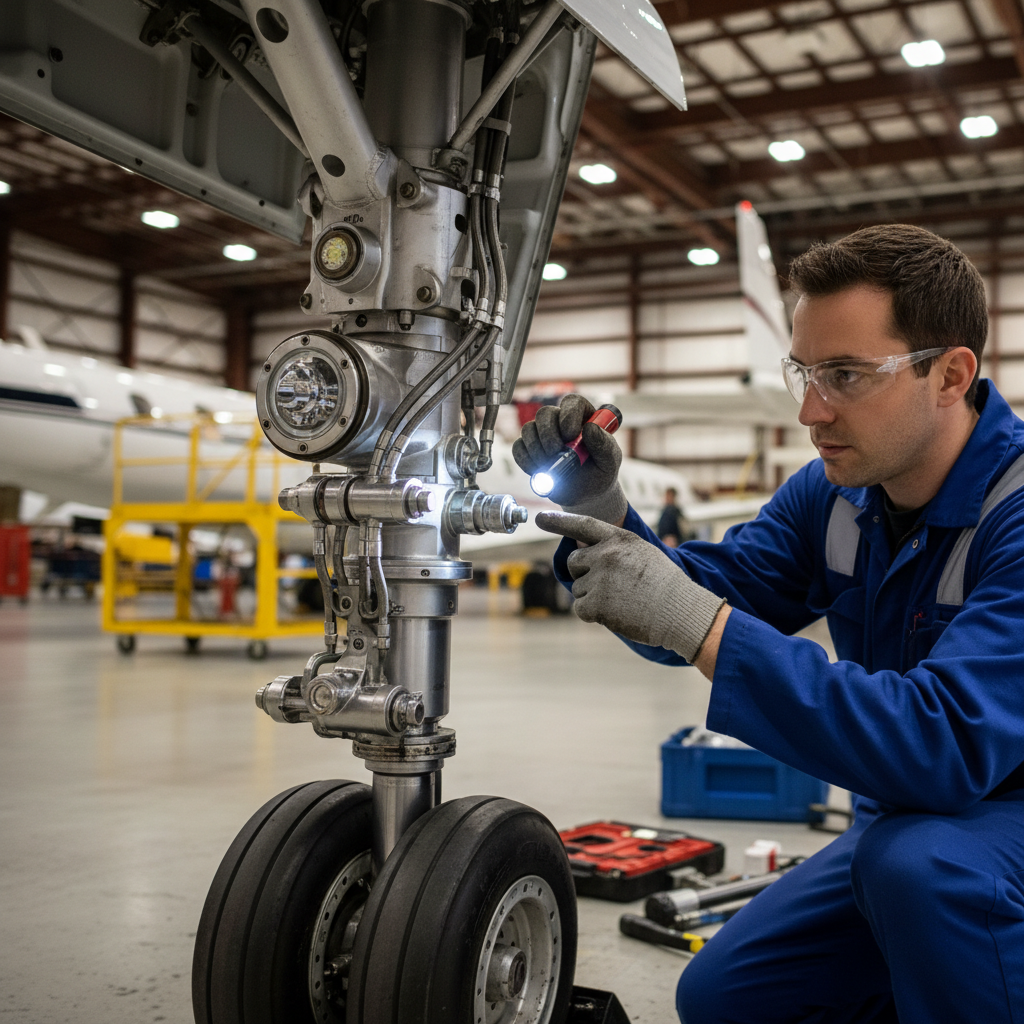
“We had a client whose aircraft sat in our hangar for fourteen weeks just waiting for a nose-gear actuator,” says Marcus Vance, a veteran parts procurement manager at an independent Midwest maintenance provider. “The factory lead time was listed as indefinite. That is not a timeline a business can work with. If you cannot fly the plane, it is just an expensive aluminum sculpture.”
The Scavenger Hunt: Teardowns and Parting Out
To keep these jets in the air, independent maintenance, repair, and overhaul (MRO) providers have had to become incredibly resourceful. One of the most effective strategies has been the acquisition of retired or damaged airframes for parting out. It is a grim but necessary circle of life in the aviation world.
When an older Learjet 60 reaches the end of its economic life—often due to an upcoming major inspection that costs more than the aircraft is worth—MROs or third-party parts brokers will buy the entire airframe. They strip it down to the bare metal, cataloging every single nut, bolt, actuator, and wire. These salvaged parts are then cleaned, inspected, tested, and recertified for use on other aircraft.
This teardown market has exploded in recent years. Independent providers like West Star Aviation, Duncan Aviation, and various boutique parts brokers are constantly scanning the global market for retired airframes. However, this is a finite solution. There are only so many retired Learjets available, and the most common failure points are the same across the entire fleet. If ten operators all need the exact same windshield heat controller, buying one salvage plane does not solve the wider problem.

Beyond Scrap: PMA and Custom Engineering
Because salvaging has its limits, independent MROs are increasingly turning to advanced engineering. They are no longer just mechanics; they have become manufacturers. Two regulatory pathways allow them to do this: Parts Manufacturer Approval (PMA) and Design Approval Representative (DER) repairs.
Under a PMA, a third-party manufacturer gets permission from the Federal Aviation Administration (FAA) to produce a replacement part that is equal to or better than the original OEM part. This process is expensive and time-consuming. It requires reverse-engineering the component, sourcing identical materials, and proving to the FAA that the new part is completely safe. For high-demand items, however, it is becoming the only viable option.
Similarly, DER repairs allow highly specialized engineers to design a custom repair process for a damaged part that would otherwise have to be discarded. Instead of replacing a worn-out component with a brand-new one that does not exist, engineers create a tailored plan to rebuild it. This work is highly technical, often involving advanced metallurgy and precision machining.
- Reverse-Engineering: MROs use 3D laser scanners to map worn parts and recreate exact digital blueprints.
- Material Science: Modern alloys and composites are often used to make replacement parts more durable than the 1990s originals.
- FAA Collaboration: Dedicated engineering teams work alongside regulators to speed up the certification of safe alternatives.
The Owner’s Hard Choice
For Learjet 60 owners, the financial calculations are changing rapidly. A typical Learjet 60 on the pre-owned market might be worth between $1.5 million and $2.5 million depending on its age and engine program status. But a major 12-year airframe inspection, combined with the need for a few hard-to-find replacement parts, can easily run into hundreds of thousands of dollars.
If a plane requires a $300,000 repair and must sit idle for half a year, many corporate boards are choosing to walk away. They are selling their Learjets to salvage yards and upgrading to newer, active production models like the Challenger 300 or Embraer Phenom 300. This trend further feeds the teardown market, creating a self-reinforcing loop.
Yet, those who choose to stay with the Learjet 60 remain deeply loyal. It offers transcontinental range, a spacious cabin, and a climb rate that modern light jets simply cannot match. For these dedicated operators, the survival of their aircraft relies entirely on the ingenuity of independent MROs. Without these third-party shops rewriting the rules of legacy support, the legendary Learjet 60 would be fast on its way to becoming a relic of the past.