Learjet 60 Operators Face Costly 2027 Avionics Dilemma
Rising maintenance costs and looming 2027 avionics deadlines leave Learjet 60 owners deciding whether to upgrade or scrap their midsize jets.

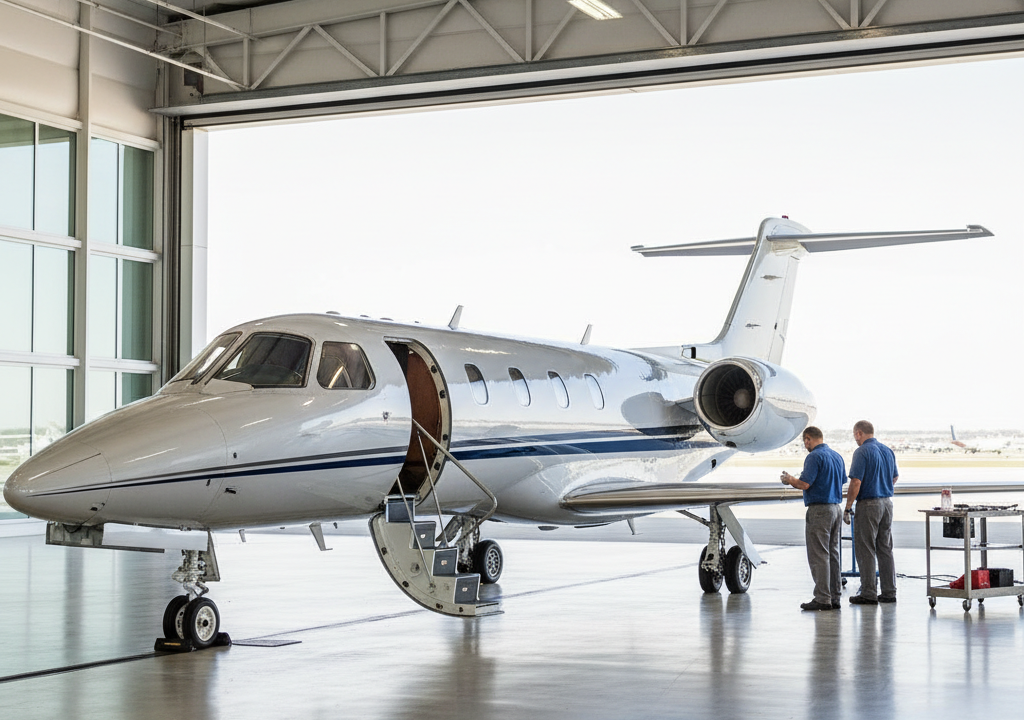
For decades, the Learjet 60 was the darling of the midsize corporate aviation world. It climbed fast, flew high, and carried the legendary name of William Lear with pride. But today, the twin-engine business jet is hitting a severe economic wall. A combination of aging systems, skyrocketing engine maintenance costs, and looming global airspace deadlines is forcing many operators to ask a painful question: Is this airplane still worth saving?
The Avionics Obsolescence Trap
At the center of the current crisis is the cockpit. Most Learjet 60s still fly with the old Rockwell Collins Pro Line 4 avionics system. Built around heavy, heat-generating cathode-ray tube (CRT) displays, this technology is rapidly becoming obsolete. Parts are scarce. When a tube burns out, finding a replacement on the secondary market is getting harder and much more expensive. Collins Aerospace has already warned that support for these legacy components is winding down.
Worse, new airspace requirements are coming fast. By 2027, updated communication and surveillance mandates, including advanced Controller-Pilot Data Link Communications (CPDLC) and modern flight tracking systems, will take full effect in both North American and European airspaces. If an operator wants to fly in high-altitude, optimal corporate jet lanes after 2027, their cockpit must be upgraded.
The price tag for a modern glass cockpit retrofit, such as the Garmin G5000 or Universal Avionics flight deck, is eye-watering. These upgrades easily run between $350,000 and $600,000 depending on the specific configuration and down-time. For a jet built in the late 1990s, that is a massive chunk of its total value.

The Million-Dollar Engine Problem
Cockpit upgrades are only half the battle. The Learjet 60 is powered by two Pratt & Whitney Canada PW305A turbofan engines. While these powerplants are known for their reliability and high-speed performance, they are incredibly expensive to maintain as they age.
Every 3,000 hours, these engines require a major hot section inspection. Every 6,000 hours, they must undergo a complete overhaul. For an operator facing a dual-engine overhaul, the bill can quickly top $1.2 million.
“The math is brutal,” says David Miller, an independent corporate aircraft broker based in Ohio. “If you have an older Learjet 60 worth about $1.5 million on the open market, and you are staring down a $1.2 million engine bill plus a $500,000 avionics upgrade to meet the 2027 mandates, you are suddenly underwater. You are putting $1.7 million into an asset that might only be worth $1.8 million when you are finished. It just does not make financial sense for most private owners.”
The Impact on Charter Fleets
This financial squeeze is hitting charter companies particularly hard. For years, the Learjet 60 was a reliable workhorse for Part 135 charter operators who needed a fast, midsize cabin for regional trips. But charter operations put high hours on airframes quickly. This accelerates the timeline for heavy structural checks and engine overhauls.

With fuel prices remaining volatile and insurance premiums for older jets climbing steadily, many charter companies are quietly retiring their Learjet 60 fleets instead of investing in the upgrades. They are opting instead to lease newer, more fuel-efficient aircraft like the Embraer Phenom 300 or the Cessna Citation Latitude.
“We looked at the numbers last year,” says Sarah Jenkins, director of maintenance for a regional charter operator in the Southeast. “Our Lear 60 was coming up on its 12-year structural inspection, both engines were due for hot sections, and the CRT screens were flickering. We decided to retire the airframe and sell it for parts. It was a sad day, but we had to make a business decision. Keeping that plane in the air would have bled us dry.”
To Upgrade or to Salvage?
So, what happens to these classic jets now? The fleet is splitting into two distinct camps.
On one side are the pristine, late-model Learjet 60XRs. Built toward the end of the production run in the early 2010s, these aircraft often have lower total airframe hours. Their owners are more likely to write the check for the avionics retrofits, viewing the upgrade as a necessary cost to protect a still-valuable asset. For these operators, a modern cockpit gives the plane another ten to fifteen years of operational life.
On the other side are the early-generation Learjet 60s from the 1990s. These are increasingly heading to salvage yards. Aircraft parts brokers are buying them up, stripping them of their landing gear, control surfaces, and usable engine parts, and scrapping the aluminum hulls. The parts are then sold to keep the remaining fleet flying.
The clock is ticking. As the 2027 airspace deadlines draw closer, the backlog at major avionics installation shops is already growing. Owners who wait too long to schedule their retrofits may find themselves grounded simply because there are no open maintenance slots left. For the legacy Learjet 60, the next three years will determine whether this iconic speedster remains a fixture of the skies or becomes a relic of aviation history.