Jack Campbell’s AHL Reset: Is He Ready for an NHL Call-Up?
With NHL goaltending depth wearing thin, Jack Campbell's AHL performance with Grand Rapids could make him a prime target for desperate teams.

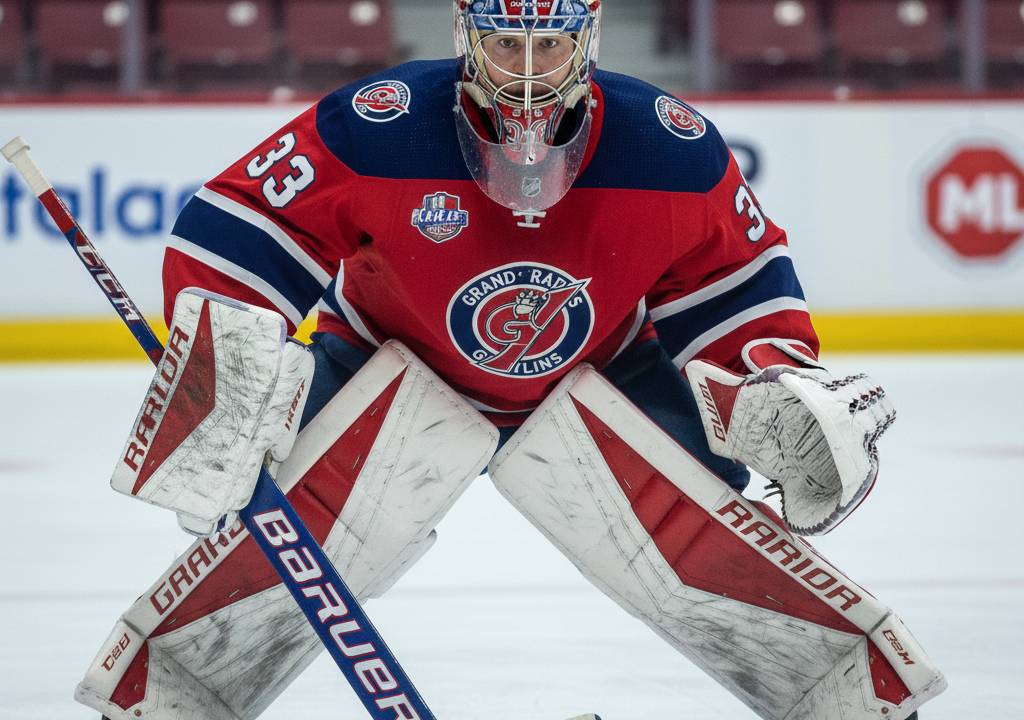
Goaltending in the NHL is a brutal, unforgiving gig. One week you are a franchise savior. The next, you are fighting for your career in the minors. Just ask Jack Campbell.
After a tumultuous couple of years, the 32-year-old netminder is back in the American Hockey League, quietly building a case for another shot at the big league. Currently playing for the Grand Rapids Griffins—the AHL affiliate of the Detroit Red Wings—Campbell is trying to rebuild both his game and his confidence. It has not been an easy road. Last year, the Edmonton Oilers bought out his massive five-year, $25 million contract after a disastrous stretch that saw him lose his starting job to Stuart Skinner. Then, ahead of this season, Campbell entered the NHL/NHLPA Player Assistance Program. He spent weeks away from the ice, focusing on his personal well-being.
He returned to action late in the autumn, cleared to play, and subsequently cleared waivers to land in West Michigan. Now, as injuries mount across the NHL and playoff races tighten, Campbell’s name is resurfacing in front-office discussions. But is he actually ready to help an NHL club, or is he destined to remain an AHL veteran?
The Grand Rapids Reclamation Project
When Detroit signed Campbell to a one-year, league-minimum contract worth $775,000 last summer, it was a low-risk gamble. If he regained his form, the Wings had cheap depth. If not, they could bury his salary in the minors without a second thought. After his stint in the player assistance program, the priority shifted from performance to transition.
In Grand Rapids, Campbell has been eased back into the rotation. He is sharing the net with top prospect Sebastian Cossa, a setup that benefits both players. Cossa gets to learn from an experienced veteran who has played in high-pressure playoff markets like Toronto and Edmonton. Campbell gets a lower-stress environment to work on his mechanics without the constant glare of NHL media.

Observers in Grand Rapids note a distinct change in Campbell’s demeanor. Known throughout his career as an incredibly self-critical player who carries the weight of every lost game on his shoulders, he appears more relaxed. His movement in the crease looks less frantic. Instead of challenging shooters too aggressively—a habit that often left him vulnerable to cross-crease passes during his down periods in Edmonton—he is playing deeper in his net, trusting his 6-foot-3 frame to do the work.
The Numbers Behind the Comeback
While AHL statistics do not always translate directly to NHL success, they offer a window into a goalie’s consistency. In his early appearances with the Griffins, Campbell has posted respectable numbers, hovering around a .905 save percentage. More importantly, he has avoided the catastrophic, multi-goal collapses that plagued his final months with the Oilers.
He is making the saves he is supposed to make. In professional hockey, that is often half the battle. When a team knows their goalie will stop the clean shots from the perimeter, they can play with more structure and confidence in front of him. Campbell has shown an ability to fight through traffic and freeze pucks, whistle-killing plays that help his defensemen catch their breath.
“He looks like a guy who has stripped away the pressure,” says an Eastern Conference scout who has watched Campbell this season. “When Jack is happy and playing instinctual hockey, he is a very capable goaltender. The challenge has always been his head. If he gets past a bad goal quickly, he can still win games in this league.”
Why NHL Teams are Watching
The modern NHL has a major goaltending problem: there simply are not enough high-caliber netminders to go around. Every season, three or four playoff contenders see their postseason aspirations threatened by injuries in the crease. Colorado has faced constant questions in net. Los Angeles has battled health issues. Even stable teams worry about what happens if their starter goes down in late winter.
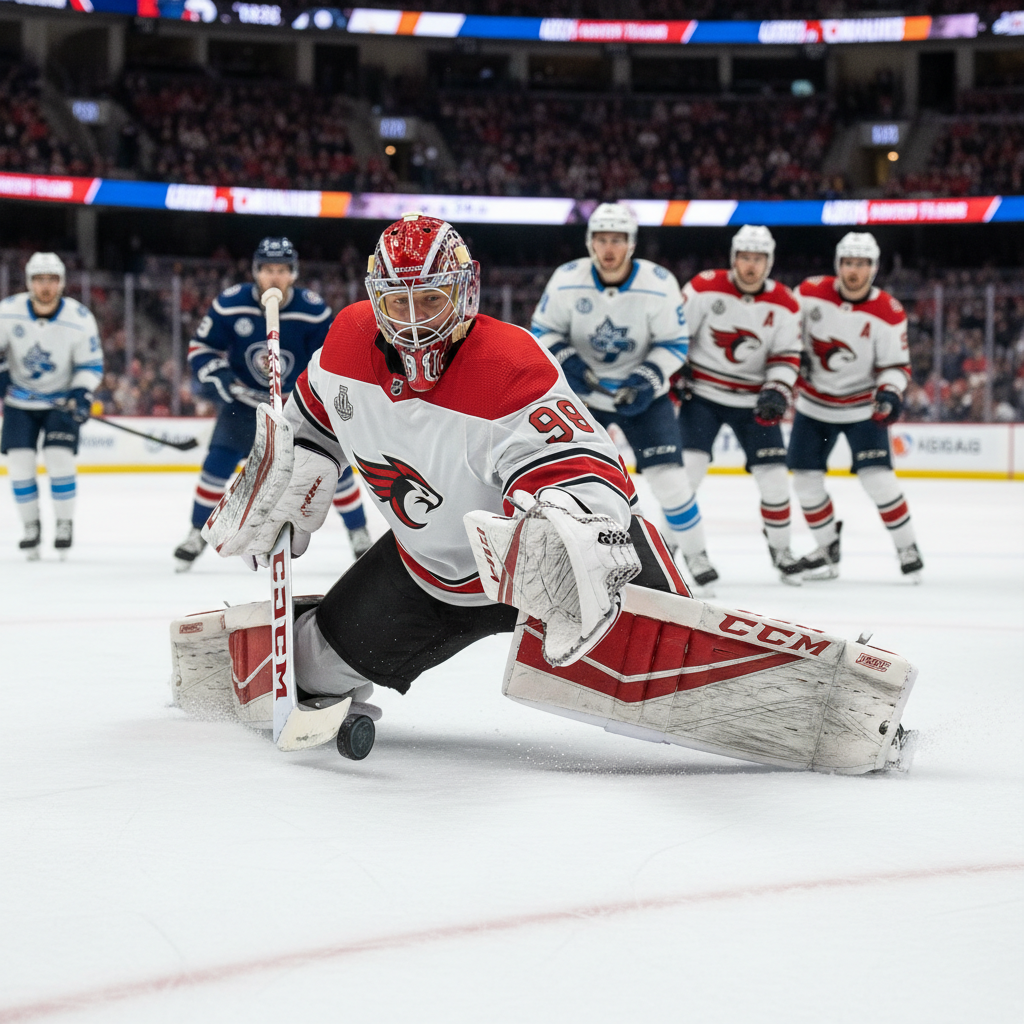
This is where Campbell becomes an intriguing option. Unlike many AHL call-up options, Campbell has 176 games of NHL experience. He has played in 14 Stanley Cup playoff games. He knows how to handle the speed of the NHL game, the complicated defensive schemes, and the media scrutiny.
The financial side of the equation makes him even more attractive. At a $775,000 cap hit, Campbell is incredibly easy to acquire. Any team trading for him would carry virtually zero cap risk. Detroit has no immediate need for him at the NHL level with Alex Lyon and Cam Talbot handling duties in Motown, meaning Red Wings general manager Steve Yzerman would likely be open to a trade if the right offer came along.
The Risks of a Recall
Despite the upside, any team trading for or calling up Campbell must proceed with caution. The mental scar tissue from his time in Edmonton is real. A sudden return to a high-pressure NHL environment could trigger the same anxiety and inconsistency that derailed his career there.
There is also the question of his physical peak. At 32, Campbell is no longer in his physical prime. While his athletic reflexes are still sharp, he cannot rely on pure physical recovery to bail him out of positional mistakes the way he did in his mid-20s. He must play a smarter, more conservative game to survive at the NHL level today.
Furthermore, any acquiring team would need to ensure they have a strong defensive system in place. Campbell is not a goalie who can single-handedly steal games behind a leaky defense. He needs structure. He needs a team that limits high-danger cross-slot passes and allows him to see the first shot clearly.
The Verdict: A Low-Cost Insurance Policy
Ultimately, Jack Campbell is no longer a projected NHL starter. Those days are likely in the past. However, as a backup or a high-end third-string insurance policy, he represents immense value in today’s tight-cap environment.
If a contending team loses their backup to a long-term injury in February or March, they could do a lot worse than trading a late-round draft pick for a revitalized Campbell. He has done the hard work of rebuilding his life and his game in the minors. Now, he is just waiting for the phone to ring.