Did VP Chiwenga Win the ZANU-PF Succession Battle?
A deep look at Vice President Constantino Chiwenga's political standing after Zimbabwe's tense ZANU-PF national conference in Bulawayo.

The annual ZANU-PF national people’s conference in Bulawayo was supposed to be a coronation of sorts. For months, a loud faction within Zimbabwe’s ruling party pushed a singular, polarizing slogan: “ED 2030.” The goal was simple. They wanted to extend President Emmerson Mnangagwa’s tenure beyond his constitutional limit, which expires in 2028.
Yet, by the time the dust settled at the Zimbabwe International Trade Fair grounds, the political calculus had shifted dramatically.
Vice President Constantino Chiwenga, the retired general who engineered the 2017 military coup that ousted Robert Mugabe, walked away with a massive, if quiet, victory. While party provinces loyal to Mnangagwa successfully passed a resolution to extend the president’s term, Mnangagwa himself publicly declined the offer.
Through the party’s legal secretary, Patrick Chinamasa, the president reiterated his intention to respect the national constitution and step down in 2028. This announcement has thrown the succession race wide open. It leaves Chiwenga as the clear frontrunner to take over the state house. But is his path to power truly secured?
The Battle of Wills in Bulawayo
The tension in the conference hall was palpable. On one side stood the civilian loyalists of the president. They controlled the party machinery and provincial structures. On the other stood Chiwenga and his backers, heavily rooted in the country’s powerful military and security apparatus.
For Chiwenga, the “ED 2030” campaign was a direct threat. He has long believed there was a tacit agreement made during the 2017 power transition: Mnangagwa would serve two terms and then hand over the reins to his deputy.
The Bulawayo conference became a high-stakes game of political chicken. Mnangagwa’s loyalists pushed hard, hoping to force a constitutional amendment. But changing the constitution is a messy, legally fraught process that requires a two-thirds majority in parliament and, crucially, the backing of the military.
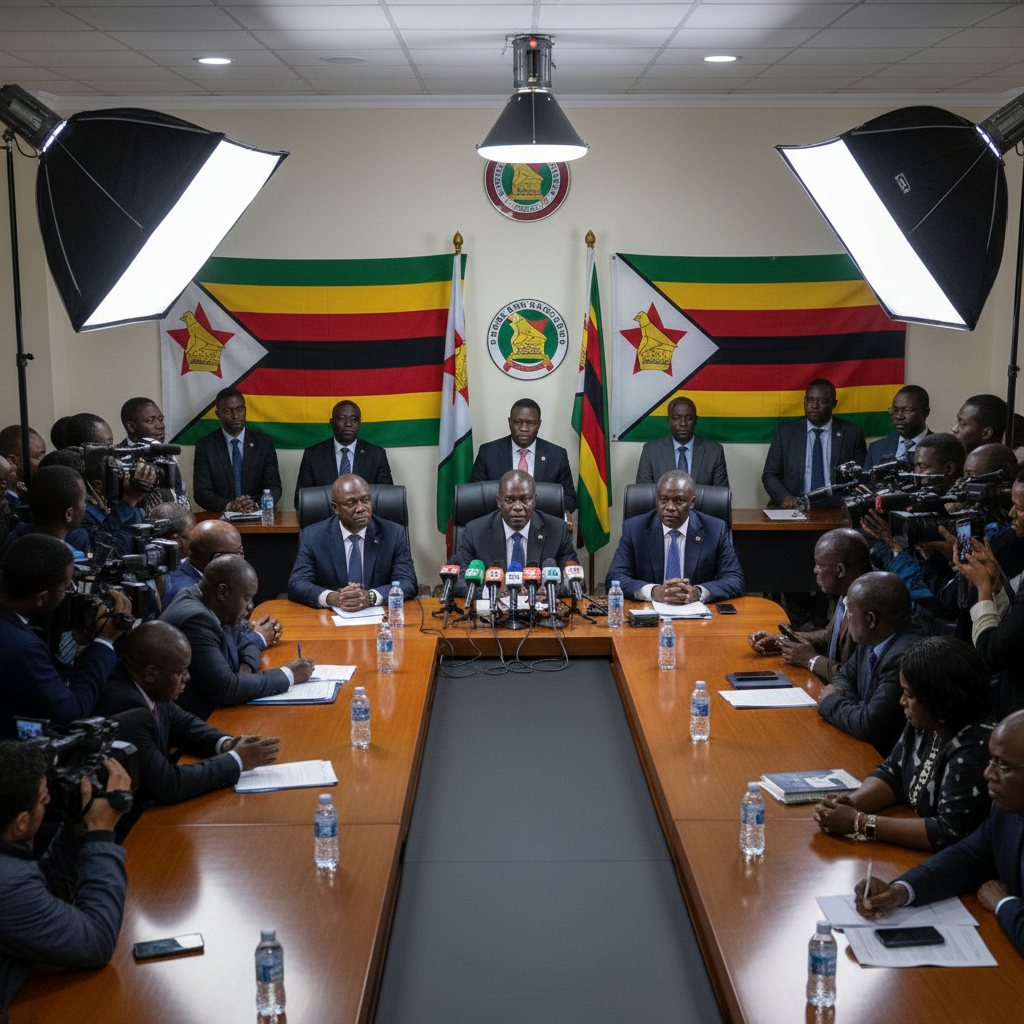
In the end, Chiwenga’s faction held the line. The military’s quiet veto power loomed large over the deliberations, forcing a compromise that kept the 2028 transition timeline intact.
GET FREE $1000 AMAZON GIFT CARD
A Calculated Retreat or a Trap?
While the 2028 exit plan seems to favor Chiwenga, Zimbabwean politics is rarely straightforward. Some analysts suggest that Mnangagwa’s public refusal to stay on is a tactical retreat rather than a final surrender.
By allowing the “ED 2030” resolution to pass while personally declining it, the president keeps his options open. He remains a powerful kingmaker who can use the resolution as leverage in future negotiations. Meanwhile, the provincial structures of ZANU-PF remain firmly in the hands of the pro-Mnangagwa faction. This means Chiwenga faces a steep uphill climb to win the hearts and minds of the party’s grassroots.
To consolidate his power, Chiwenga must now build alliances outside his traditional military base. He has already begun reaching out to key business leaders and traditional chiefs, while attempting to appeal to the younger demographic within the party.
The Security Factor and the Road to 2028
The military remains the ultimate arbiter in Zimbabwean politics. Chiwenga’s strength lies in his deep-seated connections within the Zimbabwe Defence Forces, where he is still viewed by many officers as their commander.
However, Mnangagwa has spent the last seven years slowly restructuring the security sector. He has promoted loyal officers to key commands and sidelined those suspected of harboring pro-Chiwenga sympathies. This internal reshuffling makes another military intervention highly unlikely. Any transition will have to be negotiated, looking constitutional and orderly to the international community.
If Chiwenga wants to succeed Mnangagwa, he has to ensure that his faction wins control of the party’s central committee and politburo. These organs will ultimately decide the candidate for the 2028 elections.
The next four years will be critical for Zimbabwe. The economy is struggling with high inflation, currency instability, and a severe drought. The ruling party cannot afford a protracted, messy succession war that paralyzes governance. For now, Chiwenga has survived a major onslaught, but the crown is still far from his head.