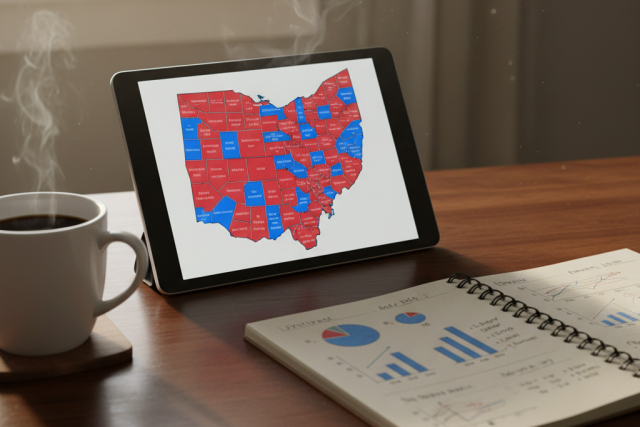
How Suburban Shifts Decided the 2026 Wisconsin Governor Race
Final vote tallies show how shifting margins in Milwaukee's suburbs and booming turnout in Madison secured the Wisconsin governor's mansion.

The Shifting Ground of Wisconsin Politics
The dust is finally settling across Wisconsin. After days of meticulous counting, late-night canvassing, and the certification of absentee ballots, the 2026 governor’s race has a clear winner. Democrat Sara Rodriguez has secured a razor-thin victory over Republican challenger Bryan Steil. The final margin sits at just under 22,000 votes out of nearly three million cast.
It is a tiny sliver of the electorate, but the numbers tell a massive story about where the state is heading. For decades, Wisconsin campaigns followed a predictable pattern. Democrats built huge margins in Milwaukee and Madison. Republicans dominated the rural counties and swept the wealthy suburbs. This year, that old political map did not just bend—it broke.
The Crumbling Suburban Wall in Milwaukee
The most significant shift happened in the collar counties surrounding Milwaukee. Historically known as the WOW counties—Waukesha, Ozaukee, and Washington—these suburban communities have long served as a reliable firewall for conservative candidates. To win statewide, Republicans historically needed to carry these areas by 20 to 30 percentage points.
Steil won them again this year, but his margins were severely bruised. In Ozaukee County, home to affluent lakefront towns like Mequon, Steil won by just six points. Ten years ago, Republican candidates regularly cleared 20-point victories there. In Waukesha County, the state’s largest suburban prize, the Republican margin shrank by nearly four percentage points compared to the last gubernatorial cycle.
“The ground shifted under our feet,” said Mark Graul, a veteran Republican strategist based in the state. “We are seeing college-educated suburban voters, particularly women, drift away from the party over social issues and political tone. You simply cannot win statewide in Wisconsin when your suburban margins are evaporating this quickly.”
The Dane County Turnout Machine
While the Republican firewall cracked in the east, the Democratic engine roared in the west. Dane County, home to the state capital of Madison and the University of Wisconsin, is no longer just a liberal stronghold. It has become an unprecedented turnout machine.
GET FREE $1000 AMAZON GIFT CARD
Madison’s suburbs are booming. Young families, tech workers, and healthcare professionals are flooding into towns like Sun Prairie, Fitchburg, and Verona. They showed up to vote in numbers that defied typical midterm trends. Total turnout in Dane County topped 83 percent, a staggering figure that rivaled presidential election levels. Rodriguez swept the county with 79 percent of the vote, netting a massive 150,000-vote cushion that wiped out Steil’s advantages in the rural north and west.
Persuasion over Partisanship
It was not just about getting partisan voters to the polls, though. It was also about persuasion. In moderate suburbs like Middleton, voters who previously split their tickets decided to stick with the Democratic line.
“We did a lot of listening this year,” Rodriguez told supporters at a victory rally in Milwaukee. “We went into communities where Democrats do not usually win. We talked about funding local schools, improving healthcare access, and keeping our economy stable. People are tired of division. They want common sense.”
A Changing Map for 2028
Steil’s campaign focused heavily on inflation, high interest rates, and public safety. That message resonated deeply in rural communities along the Mississippi River and in northern manufacturing towns, which swung even further to the right. However, the raw vote totals in those declining rural areas could not compete with the rapid population growth in the southern suburbs.
The lessons for future elections are clear. Republicans can no longer rely on the traditional suburban collar counties to rescue them. Without a strategy to win back moderate suburban families, the path to statewide victory for the GOP in Wisconsin will remain incredibly narrow. Meanwhile, Democrats face the challenge of keeping their Madison-area base energized. In a state decided by less than one percentage point, every single suburban block now matters.