Chris Murphy Makes Final 2026 Midterm Campaign Push in Connecticut
Senator Chris Murphy wraps up a whirlwind campaign tour across Connecticut on the eve of the critical 2026 midterm elections.

The Final Sprint Across Connecticut
The autumn air in Hartford was crisp, but inside the diner, the energy was boiling over. Senator Chris Murphy stood near the counter, a lukewarm mug of coffee in his hand and his sleeves rolled up. It was just after dawn on Monday, the final day of a grueling campaign season. By tomorrow night, the polls will close, and the state will have decided his political future. He knows every vote matters. He did not waste a single minute.
Murphy is embarking on a 24-hour, multi-city sprint. His itinerary reads like a map of Connecticut’s diverse political makeup. From the working-class neighborhoods of New Haven to the affluent suburbs of Fairfield County, his team is leaving nothing to chance. Staffers, fueled by donuts and caffeine, hovered nearby, keeping him strictly on schedule. The goal is simple: drive up turnout in key Democratic strongholds while trying to win over undecided moderates who are still on the fence.
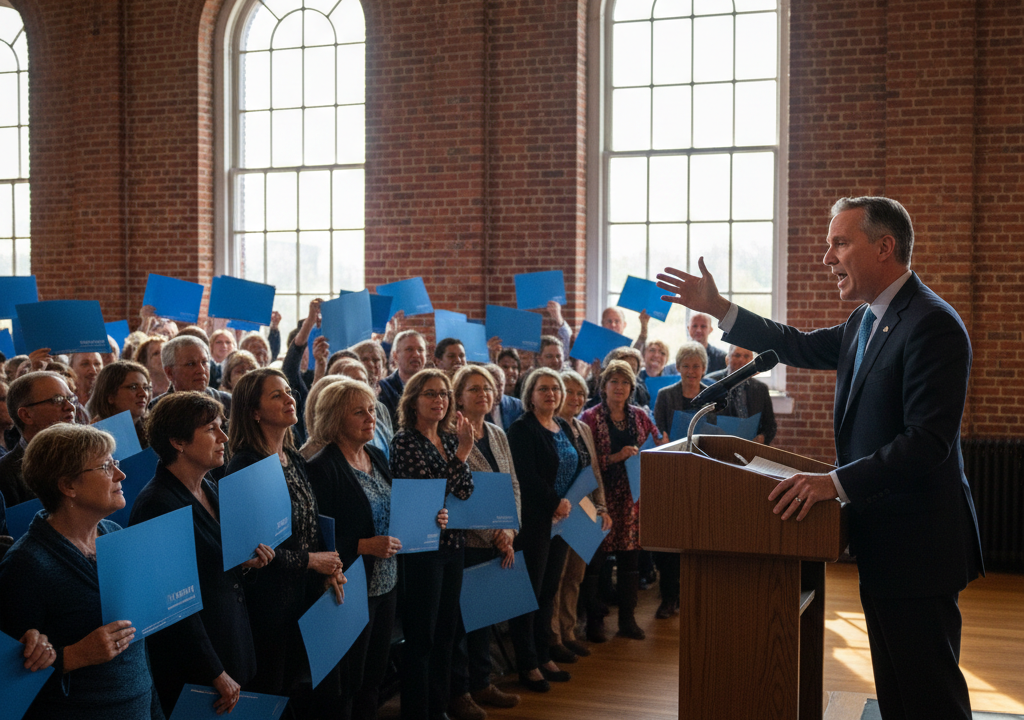
“We don’t take anything for granted,” Murphy told a small gathering of supporters outside a local union hall. His voice was slightly raspy from weeks of speeches. “This election is about who we are as a state and what we value. Every single door we knock on today could be the difference.”
What Is Driving the Voters?
While Connecticut has historically leaned blue, the national mood is volatile. Voters are feeling the squeeze of persistent inflation and high housing costs. These kitchen-table issues have given Republicans a potent line of attack. Murphy has spent much of his time on the trail addressing these anxieties directly, pointing to federal investments in infrastructure and green energy as long-term solutions.
But for many voters, the race is about more than just the economy. In Connecticut, national debates feel very local. Murphy has long been one of the Senate’s most prominent voices on gun safety, a position forged in the tragedy of the Sandy Hook Elementary School shooting. It remains a cornerstone of his political identity. At a rally in Bridgeport, he reminded the crowd of the progress made on federal gun legislation while warning that those gains could be rolled back if the Senate changes hands.

The message resonated with local residents like Sarah Jenkins, a mother of two from West Hartford. “I want someone who isn’t afraid to stand up to the gun lobby,” she said, standing in line to get a photo with the senator. “Chris has been doing that for years. That’s why I’m here.”
The Challenge from the Right
On the other side of the aisle, Republicans see an opportunity. The GOP challenger has run a disciplined campaign focused almost entirely on the cost of living, immigration, and the need for a check on the current administration’s power. Republican rallies across the state have drawn passionate crowds, with speakers blaming Murphy and his party for domestic economic struggles.
The challenger has painted Murphy as a career politician who has lost touch with the immediate, everyday needs of Connecticut families. They argue that high taxes and federal spending are choking local businesses. It is a message that has found a receptive audience in some of the state’s more conservative rural pockets and among independent voters who feel left behind.
Defense Jobs and the Local Economy
To counter this, Murphy has leaned heavily on his record of securing federal funding for Connecticut’s massive defense industry. The state is home to major military contractors like Electric Boat in Groton and Pratt & Whitney in East Hartford. These companies employ tens of thousands of local union workers, and their contracts are vital to the regional economy.
During a midday stop near the submarine shipyards, Murphy emphasized his role on the Senate Appropriations Committee. He argued that his seniority is crucial for keeping those defense dollars flowing into the state. “Those are good-paying, stable jobs that support entire communities,” he said. “We fought hard to get those contracts, and we have to protect them.”
This argument holds weight with voters like David Vance, a retired machinist. “At the end of the day, it’s about jobs,” Vance said. “You want someone in Washington who can bring home the bacon. Murphy has proven he can do that.”
National Stakes in a Local Race
Though this is a state election, the national implications are massive. The balance of power in the U.S. Senate is razor-thin. A shift of just one or two seats could change control of the chamber, altering the trajectory of judicial appointments, federal budgets, and legislative agendas for the next two years. Because of this, national money and attention have poured into Connecticut, turning local airwaves into a non-stop barrage of campaign advertisements.
Murphy has also spent the last few weeks pulling double duty. He has been helping his colleagues in tighter swing-state races while trying to ensure his own house is in order. It is a delicate balancing act, but his supporters believe his national profile ultimately helps his constituents.
As the sun began to set on Monday evening, Murphy’s campaign bus pulled into New Haven for a final, high-energy rally. The crowd was loud, the music was pumping, and the volunteers looked exhausted but determined. There were no more debates to be had, no more ads to run. All that was left was the ground game.
“Tomorrow, the choice is yours,” Murphy told the cheering crowd as he wrapped up his speech. “Let’s go win this.”