FAA Probes Learjet 60 Mid-Air Systems Blackout Near Teterboro
The FAA is investigating a terrifying mid-air incident after a Learjet 60 suffered a near-total systems failure on its way to Teterboro.

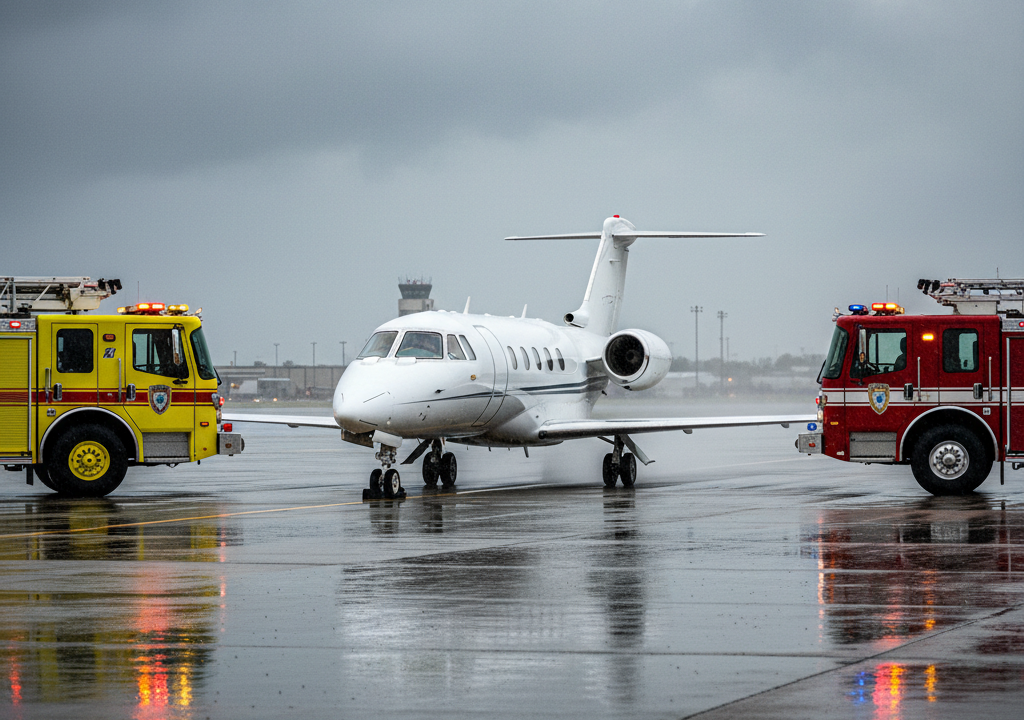
It was a quiet Tuesday afternoon over the mid-Atlantic coast when the cockpit of a Learjet 60 went completely dark. The twin-engine private jet, cruising at 39,000 feet, was carrying four passengers and two crew members from West Palm Beach, Florida, to Teterboro Airport in New Jersey. Without warning, the modern avionics suite flickered once, hissed, and died.
The pilots suddenly found themselves flying a 20,000-pound metal tube at nearly 500 miles per hour with zero primary flight instruments. No autopilot. No main radio. No transponder to tell air traffic controllers who or where they were. This was a catastrophic, cascading electrical failure—the kind of emergency pilots train for but pray they never actually face in busy airspace.
A Blind Descent Over Busy Skies
The Federal Aviation Administration (FAA) has officially launched an intensive investigation into the mid-air systems failure, which occurred on October 14. According to preliminary radar data and FAA logs, the aircraft lost all secondary and primary electrical power systems roughly 40 miles south of its destination.
Captain Marcus Vance, a veteran pilot with more than 9,500 hours in logbooks, was at the controls. “We lost everything in a fraction of a second,” Vance recalled in a preliminary statement. “The primary flight displays went black. The backup screens didn’t kick in. We were left with the mechanical standby instruments, which are about the size of a pocket watch.”
To make matters worse, the flight was operating under Instrument Flight Rules (IFR) due to a thick, low-lying cloud deck blanketing the New York metropolitan area. The pilots could not see the horizon. They had to rely entirely on those tiny, mechanical backup gauges to keep the aircraft level and prevent a deadly graveyard spiral.
Air Traffic Control Scramble
Down on the ground, air traffic controllers at the New York Air Route Traffic Control Center in Ronkonkoma suddenly noticed a primary radar target fading. The altitude readout for the Learjet 60 disappeared from their screens. The transponder was dead.

“We lost their secondary radar signature instantly,” an air traffic controller familiar with the incident said on the condition of anonymity. “In that airspace, a fast-moving target without an altitude readout is an immediate crisis. We had to quickly reroute several commercial airliners to clear a wide block of airspace around where we estimated the jet to be.”
Using a battery-powered emergency standby radio, the flight crew managed to broadcast a weak “Mayday” signal. The radio’s range was severely limited without the aircraft’s main generators, but controllers picked up the scratchy transmission. The message was clear: they had no instruments, limited control, and needed an immediate emergency descent to Teterboro.
The Landing at Teterboro
With air traffic control clearing the skies ahead, the pilots began a tense, manual descent. They broke through the clouds at roughly 1,500 feet, finally gaining visual contact with the ground. Teterboro Airport’s runway 6 was directly ahead.
Without electrical power to run the normal hydraulic pumps, the crew had to use the emergency gravity-extension system to drop the landing gear. The heavy tires locked into place with a reassuring thud just moments before touchdown.
The Learjet 60 touched down safely at 3:48 PM, screaming down the runway with emergency vehicles chasing close behind. Thanks to the pilots’ quick thinking, no one was injured. The aircraft, however, was disabled on the runway, forcing Teterboro to temporarily halt all arrivals and departures for over an hour.
FAA and NTSB Dig into the Hardware
Federal investigators are now focusing on a highly specific chain of mechanical and electrical events. The Learjet 60, manufactured by Bombardier, relies on a dual-generator electrical system. A main generator is attached to each engine, and a backup battery system is designed to provide at least 30 minutes of emergency power to essential flight instruments if both generators fail.
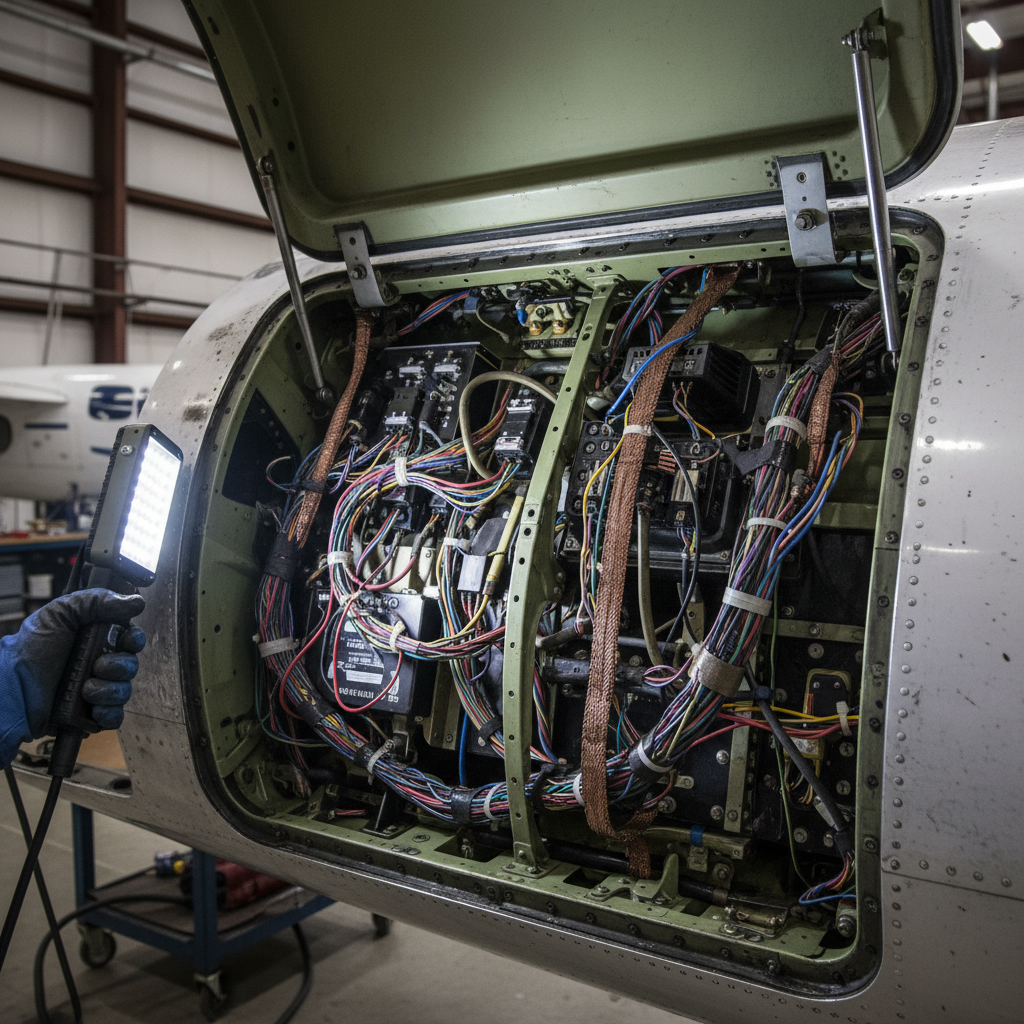
In this case, neither the primary generators nor the emergency standby battery functioned as designed. Investigators have already quarantined the aircraft in a hangar at Teterboro to examine the electrical buses and the physical wiring harnesses.
“A total loss of all electrical buses on a certified transport-category aircraft is incredibly rare,” said Richard Harrison, an independent aviation safety expert and former NTSB investigator. “The system is designed with multiple redundant pathways. For a complete blackout to occur, you either need a major physical fire in the electrical bay, a catastrophic failure of the main distribution bus, or a serious maintenance error where wiring was improperly routed.”
Maintenance Under Scrutiny
According to FAA records, the specific aircraft involved in the incident, registration N600AF, had undergone a major 12-month inspection just two weeks before the flight. This maintenance work included upgrades to the cockpit’s avionics and rewiring of the auxiliary power unit (APU) interface.
Investigators are currently auditing the maintenance logs and interviewing the technicians who performed the work at a service center in Fort Lauderdale, Florida. They want to know if an improper ground wire connection or a short circuit in the main power junction box triggered the dual-generator trip.
Bombardier has stated it is cooperating fully with the FAA’s probe. The company has not yet issued any fleet-wide safety alerts, though operators are watching the investigation closely. If a systemic design flaw is uncovered, the FAA could issue an Emergency Airworthiness Directive, forcing operators of the Learjet 60 to inspect their electrical systems immediately.
The Legacy of the Learjet 60
The Learjet 60 is a mid-size cabin, medium-range business jet that has been a staple of corporate fleets since the early 1990s. While popular for its speed and climbing capability, the model has seen its share of safety investigations over the decades. Most notably, landing gear issues and braking performance have drawn regulatory focus in previous years, but electrical failures of this scale are highly unusual for the type.
Aviation safety groups are emphasizing that while the incident ended safely, it highlights the critical importance of pilot training on basic manual flying. Modern flight decks have become so automated that manual flying skills can degrade. In this case, the crew had no choice but to fly the old-fashioned way.
For now, the crew is being hailed for their superb airmanship. Flying a complex, heavy jet through busy airspace with nothing but mechanical standby gauges is a feat few pilots ever have to perform. Thanks to their calm under pressure, a potential disaster became a testament to basic pilot skills.