NTSB Details Learjet 60 Runway Overrun in New Report
A preliminary NTSB report on a recent Learjet 60 runway overrun reveals details of sudden brake failure on a wet Maryland runway.

No Braking Action on Slick Runway
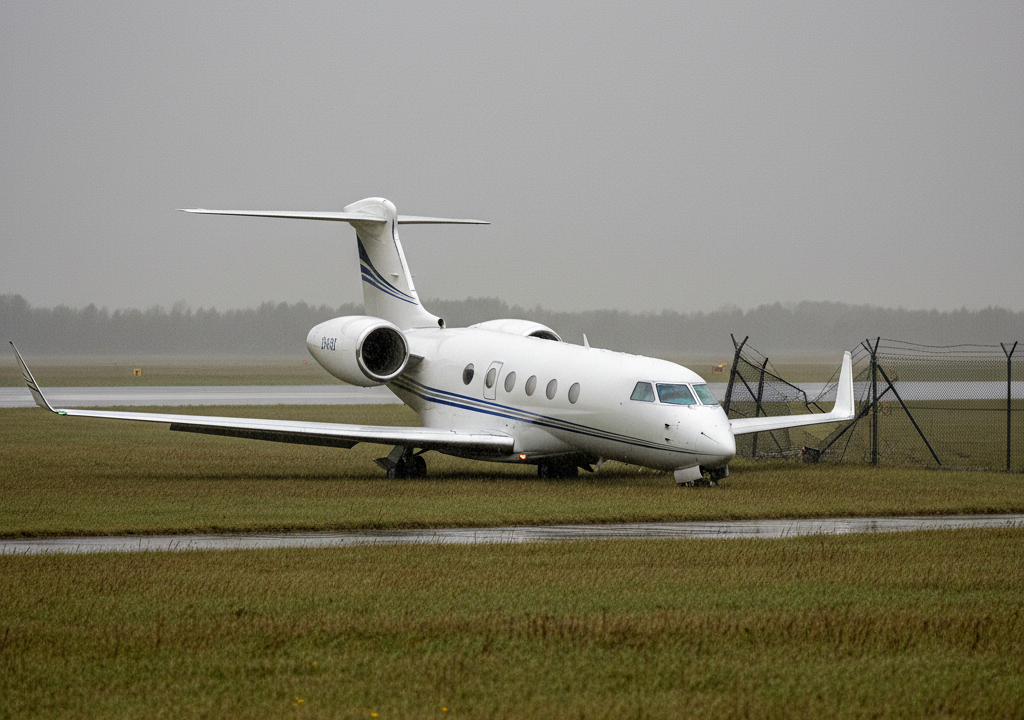
Federal investigators have pulled back the curtain on what went wrong during a recent close call involving a corporate jet in Maryland. The National Transportation Safety Board (NTSB) released its preliminary report on a Learjet 60 that overran the runway at Montgomery County Airpark (GAI) in Gaithersburg. It was a rainy afternoon. The jet, carrying four passengers and two crew members, ended up sitting in the mud past the airport boundary fence. Nobody was hurt, but the plane took a beating.
The trip started smoothly enough. The Learjet 60, registered under tail number N124CP, took off from Palm Beach, Florida. It was a routine charter run. According to the NTSB’s initial findings, the flight up the East Coast was uneventful. The pilots were highly experienced. The captain had thousands of hours in command, and the first officer was no novice either. But as they neared Maryland, the weather began to deteriorate. Light rain was falling. The runway was wet.
The Critical Seconds on Runway 32
Landing a fast mid-size jet like a Learjet 60 on a 4,200-foot runway requires precision under the best conditions. On a wet runway, the margin for error shrinks to almost nothing. The preliminary report outlines the crucial timeline. The jet approached Runway 32. The crew completed their pre-landing checklists. Touchdown was on target. But the moment the wheels hit the pavement, things went sideways.
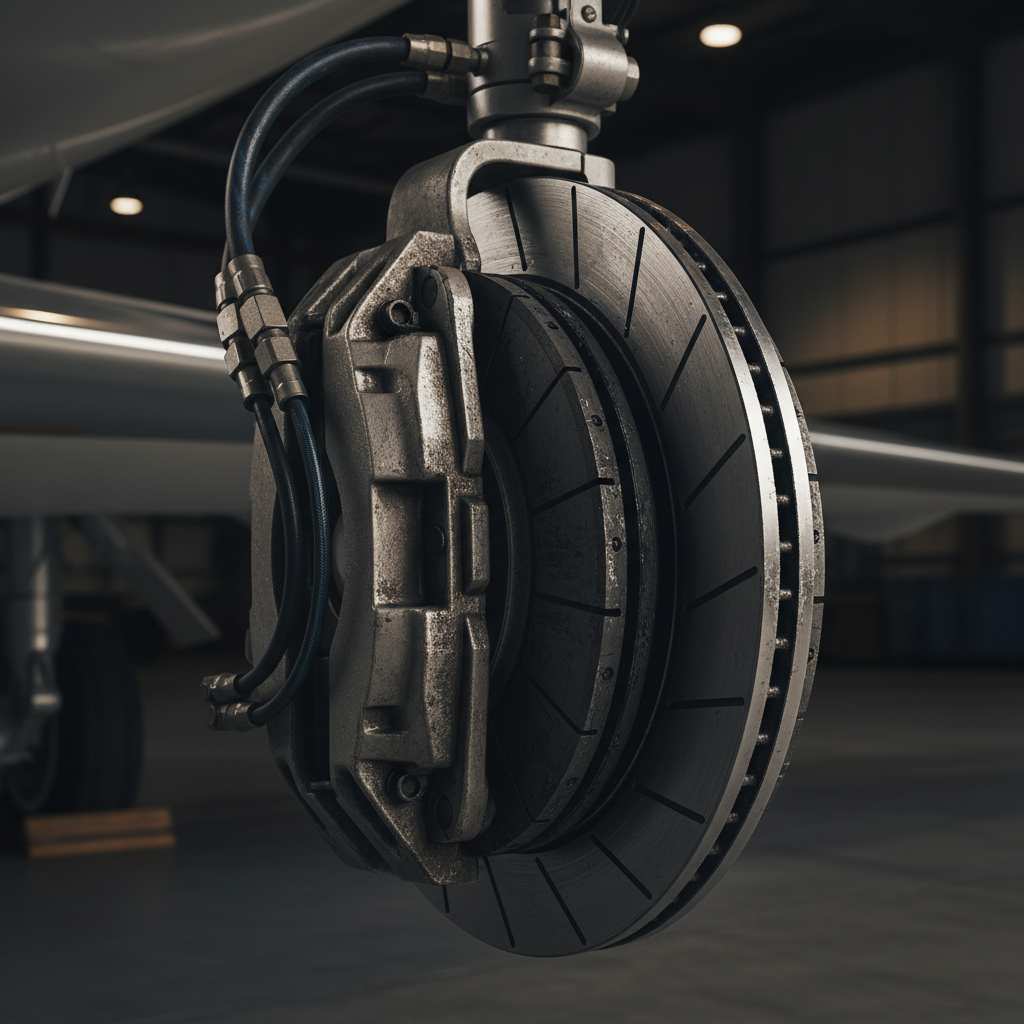
The captain told investigators that as soon as the main landing gear touched down, he applied the wheel brakes. Nothing happened. The pedals felt soft. They went straight to the floor, the pilot later told safety investigators. He pumped them. Still, there was no deceleration. The first officer noticed the lack of braking action immediately. Realizing they were running out of asphalt fast, the captain deployed the thrust reversers. They heard the engines roar as they tried to redirect the thrust, but it was not enough to stop the heavy jet on the slick surface.
The Emergency Brake Pull
With the end of the runway rapidly approaching, the captain reached for the emergency brake handle. In the Learjet 60, the emergency brake system bypasses the normal hydraulic braking and the anti-skid system, applying direct pneumatic pressure to the brakes. It is a tool of last resort. When the captain pulled the handle, the tires locked up. The jet began to slide. It drifted off the centerline, skidding sideways as it ran out of runway.
The aircraft plunged off the end of the runway, plowed through a grassy safety area, and crashed through a chain-link security fence. It finally ground to a halt just feet away from a local roadway. Mud and debris flew everywhere. The nose gear collapsed, shoving the nose of the plane into the dirt and damaging the radar dome and undercarriage. Local emergency crews rushed to the scene. Miraculously, there was no fire, and all six people on board climbed out of the cabin completely unharmed.
A History of Touchy Landings
The NTSB’s preliminary report does not assign blame. That will come in the final report, which could take a year or more. However, the document points directly to where investigators are focusing their attention: the aircraft’s braking and anti-skid systems. The Learjet 60 relies on a complex hydraulic braking system coupled with an electronic anti-skid system designed to prevent the tires from locking up and sliding on wet surfaces. If the anti-skid system malfunctions, or if there is a hydraulic failure, stopping distances can double or triple.
Aviation safety experts note that the Learjet 60 has always had a reputation for being a demanding airplane on landing. It flies fast on final approach, often crossing the runway threshold at speeds exceeding 130 knots. Because of this, it demands a lot from its brakes and tires. Investigators will look closely at the maintenance records of this specific airframe to see if there were any pre-existing issues with the hydraulic lines or the brake wear indicators.
What Happens Next in the Investigation
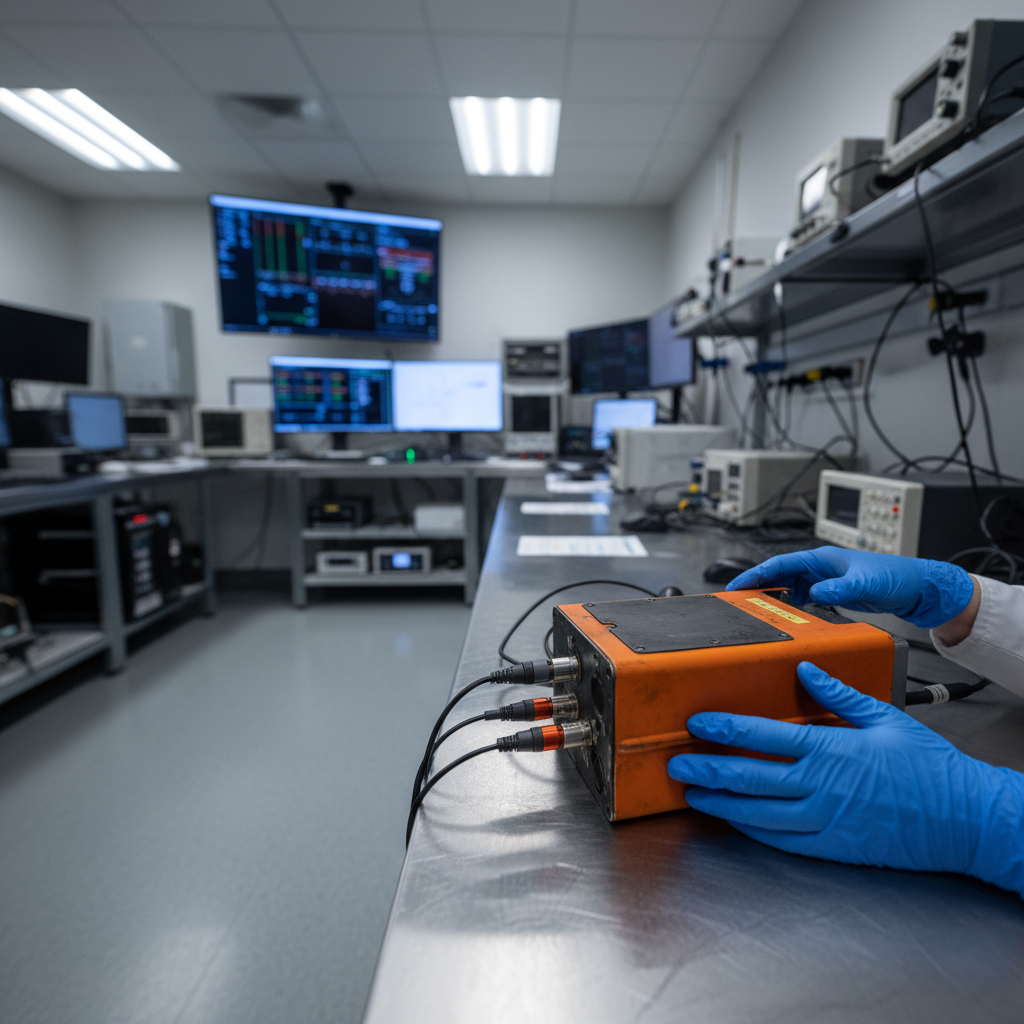
Now, NTSB metallurgists and systems engineers are digging into the wreckage. They have recovered the plane’s flight data recorder (FDR) and cockpit voice recorder (CVR). These devices are currently at the NTSB’s laboratory in Washington, D.C., where specialists are downloading and analyzing the data. Investigators will look at several key parameters:
- The exact airspeed of the jet at the moment of touchdown.
- The precise timing of the brake application and thrust reverser deployment.
- Whether the anti-skid system commanded the brakes to release because it falsely detected a skid.
- The physical condition of the brake pads, rotors, and hydraulic actuators.
Beyond the metal and hydraulics, the NTSB is also examining human performance. They will look at the crew’s landing calculations. Did they properly account for the wet runway and the tailwind component? Did they touch down at the correct speed and point on the runway? The preliminary report shows the pilots did what they were trained to do when normal systems failed—they pulled the emergency brake. But in aviation, sometimes even doing everything right isn’t enough to overcome a mechanical glitch on a short, wet strip of asphalt.