NYC Marathon App Glitches Leave Spectators in the Dark
A breakdown in the official NYC Marathon tracking app left thousands of spectators unable to locate runners during the race's peak hours.

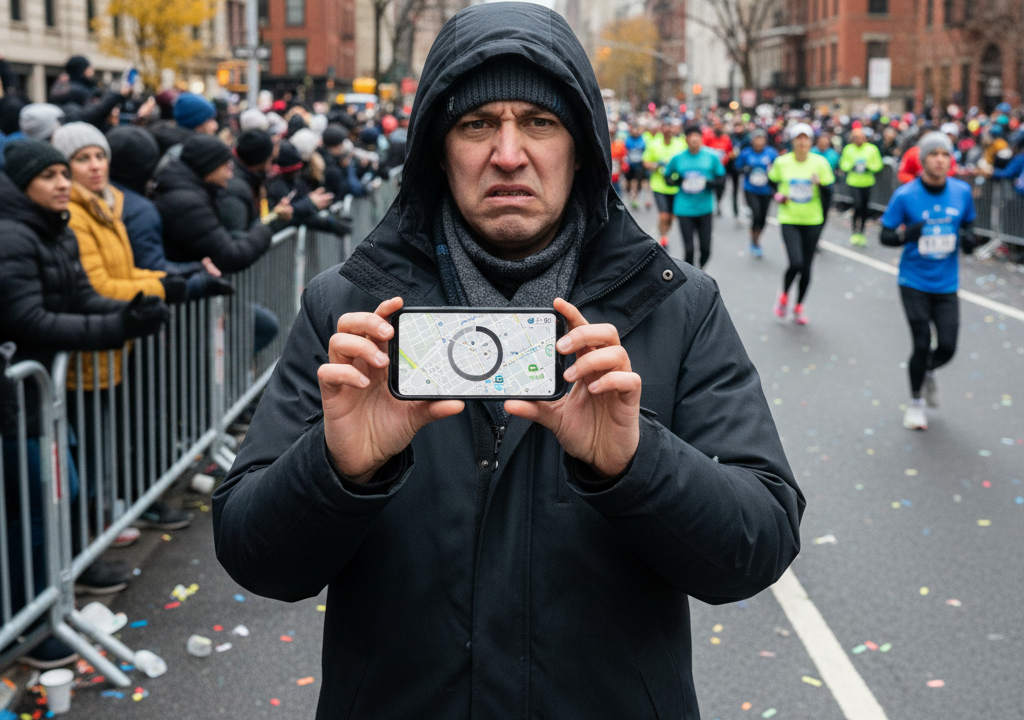
The streets of New York were packed. More than 55,000 runners poured through the five boroughs on Sunday, cheered on by an estimated two million spectators. It should have been a seamless celebration of human endurance. But for thousands of family members and friends waiting along the route, the day turned into a stressful game of hide-and-seek.
The culprit was not the crisp autumn weather or the crowded subway lines. Instead, it was the official TCS New York City Marathon App.
During the race’s busiest hours, the platform suffered widespread technical glitches. Users reported frozen screens, severe tracking delays, and complete system crashes. For several critical hours, finding a loved one in a sea of runners became almost impossible.
A Sudden Mid-Morning Blackout
The trouble began in earnest around 10:15 a.m. as the wave of mid-pack runners—the largest group in the race—started crossing the Queensboro Bridge into Manhattan. This is traditionally one of the most exciting moments of the marathon, where runners are greeted by a wall of sound on First Avenue.
It is also the moment when spectators need precise timing to spot their runners. On Sunday, however, the data simply stopped updating.
Some users saw their screens freeze entirely. Others watched in frustration as the app insisted their runners were still in Brooklyn, even though those runners had already crossed into the Bronx. The delay was not a matter of seconds. For many, the tracking lagged by twenty to thirty minutes.
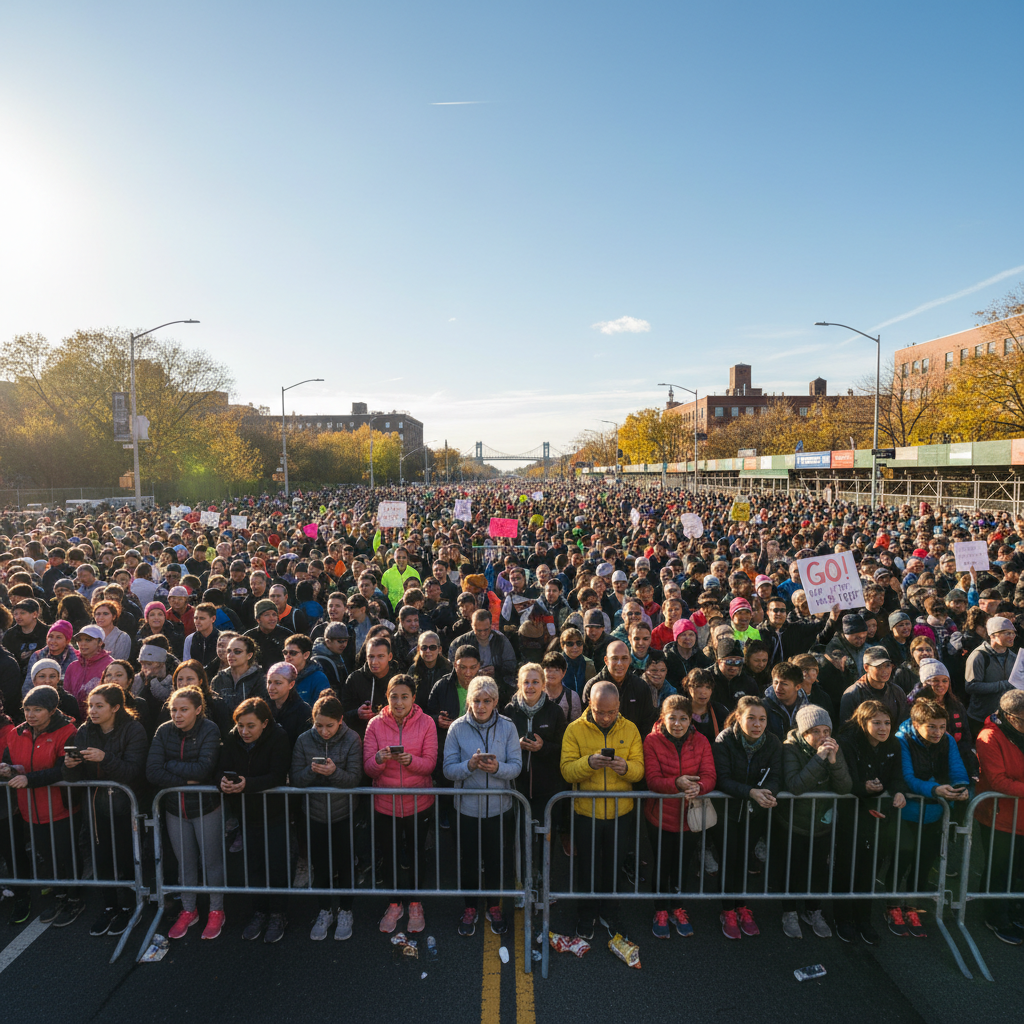
Missed Connections on First Avenue
For spectators like Marcus Vance, who traveled from Chicago to support his sister, the app failure ruined a moment months in the making. He had planned to catch her at Mile 16 and then sprint to Central Park for the finish.
“I was refreshing the screen every ten seconds,” Vance said, standing near 72nd Street. “It kept saying she was at Mile 13. Then suddenly, I got a text from her saying she was already past Mile 18. I missed her completely. It is incredibly disheartening when you fly all this way and miss the one shot you have to cheer them on.”
Vance was far from alone. Social media quickly filled with complaints from frustrated onlookers. On platforms like X and Reddit, the hashtag #NYCMarathon became a troubleshooting forum, with users sharing tips on how to estimate runner locations using average pace calculators and old-school stopwatches.
The Tech Behind the Trouble
The official app, developed by Tata Consultancy Services (TCS) in partnership with the New York Road Runners (NYRR), is designed to handle immense traffic. It utilizes timing mats placed at various intervals along the 26.2-mile course. As a runner passes over a mat, the chip in their race bib sends a signal, updating their location on the app.
Get free $1000 Amazon gift crad
So what went wrong?
Tech analysts point to a perfect storm of cellular network congestion and server overload. When tens of thousands of people gather in dense areas like First Avenue or the finish line in Central Park, local cell towers are pushed to their limits. When you combine weak cellular signals with millions of simultaneous app pings to the central server, the system bottlenecks.
While the physical timing mats continued to record the runners’ progress for the official race results, the pipeline delivering that data to the public-facing app choked under the pressure.
NYRR Acknowledges the Glitch
As complaints mounted, New York Road Runners released a brief statement acknowledging the technical difficulties. The organization apologized for the inconvenience and stated that tech teams were working actively to resolve the data synchronization issues.
“We are experiencing intermittent tracking delays due to an unprecedented volume of users accessing the app simultaneously,” the statement read. “We appreciate your patience as we work to restore real-time updates.”
For many on the sidelines, the apology came too late. By the time the app began functioning reliably again in the late afternoon, the majority of the runners had already crossed the finish line.
Going Back to Basics
With technology failing them, many spectators resorted to traditional spectating methods. People began writing their runners’ projected split times on their forearms in permanent marker. Others relied on spotters further up the course who could send basic text messages when a runner passed by.
“We had to go totally low-tech,” said Elena Rostova, who was tracking three friends from her local running club. “We knew their target marathon pace was nine minutes per mile. We just looked at our regular watches, calculated when they should be at Mile 18, and stood there staring at the crowd. We actually managed to spot two of them that way. It felt like a triumph, but we shouldn’t have to do math on the sidewalk in 2026 just to find our friends.”
The incident highlights a growing vulnerability in modern mass-participation sporting events. As organizers rely more heavily on digital ecosystems to enhance the spectator experience, any failure in that digital infrastructure can deeply impact the event itself.
For now, NYRR and TCS will have to analyze the data logs to ensure that when the starting gun fires next year, the technology can keep pace with the runners.