How Oakland and Macomb Decided the Michigan Governor Race
A deep dive into the suburban shifts and blue-collar voting blocs that crowned Michigan's next governor in the pivotal 2026 election.

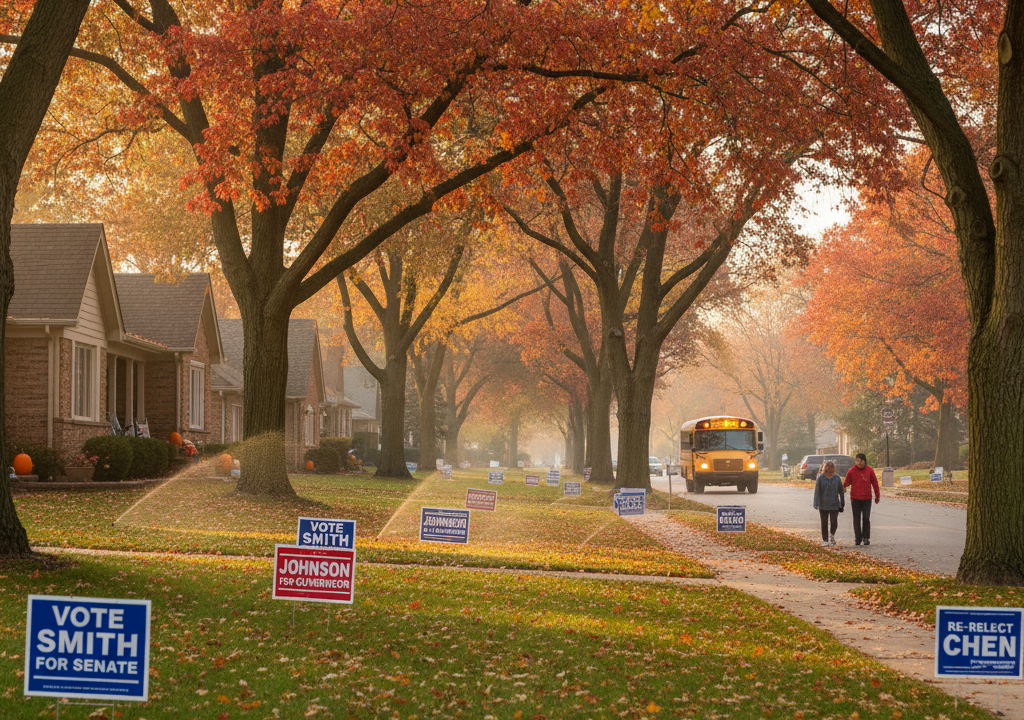
The dust has finally settled on Michigan’s 2026 gubernatorial race, and the post-election autopsy points to a familiar reality. In Michigan, you do not win the governor’s mansion without conquering the suburbs of Detroit. More specifically, the road to victory ran directly through the contrasting landscapes of Oakland and Macomb counties.
These two neighboring giants represent the ultimate political tug-of-war. To the west sits Oakland, affluent, highly educated, and increasingly blue. To the east lies Macomb, a blue-collar stronghold where populist sentiments run deep. Together, their shifting voting blocs did more than just decide the winner. They drew a new map for how statewide campaigns must be run.
The Oakland Suburban Wall
For decades, Oakland County was the crown jewel of the Michigan Republican Party. It was a place of country clubs, quiet subdivisions, and fiscal conservatism. But those days are gone. The 2026 election proved that the Democratic transition here is no longer a temporary trend. It is a permanent fixture.
The key lay in the fast-growing suburbs like Troy, Rochester Hills, and Novi. In these areas, college-educated women turned out in record numbers. Political analysts point to a mix of social issues and economic pragmatism that drove this group to the polls.

“We are seeing a major realignment,” says Adrian Hemond, a veteran political strategist based in Lansing. “Oakland County voters aren’t necessarily falling in love with progressive ideology. They are voting for what they perceive as stability and competence. The party that projects less chaos wins the white-collar suburbs.”
But it was not just the high-income suburbs. Diversifying communities in southern Oakland, including Southfield and Farmington Hills, maintained massive margins for the Democrats. This high-density turnout built a defensive wall that the GOP found impossible to breach.
The Macomb Counterweight
If Oakland is the shield for Democrats, Macomb remains the spear for Republicans. Known nationally as the birthplace of the “Reagan Democrat,” Macomb has spent the last decade shifting firmly into the conservative column. The 2026 race was no exception.
GET FREE $1000 AMAZON GIFT CARD
Working-class voters in Warren, Sterling Heights, and Clinton Township turned out heavily for the Republican ticket. Inflation, manufacturing jobs, and border security dominated the conversation at local diners and union halls. For these voters, the economic promises of the GOP resonated deeply.

Yet, the Republican strategy fell just short of the margins needed to carry the state. While the GOP won Macomb handily, they did not run up the score quite enough in the northern, more rural parts of the county, like Shelby and Macomb townships.
At the same time, ticket-splitting made a quiet comeback. A small but crucial segment of union households backed local Democratic legislative candidates while supporting the top of the ticket, or vice versa. This fragmentation diluted what needed to be a massive, unified red wave in the county.
The Battle for the Middle
What decided the entire election was the thin sliver of independent voters who live along the border of these two counties. These are the voters who do not identify with either party platform in its entirety.
In 2026, these moderate swing voters rejected extreme rhetoric from both sides. They focused on practical, kitchen-table issues. Who has a plan to fix the roads? Who will keep utility rates down? Who will protect local schools?
Ultimately, the winning campaign managed to appeal to both Oakland’s craving for social stability and a small but decisive fraction of Macomb’s economic anxieties. It was a delicate balancing act, won by focusing on pragmatic, everyday solutions rather than national culture wars.
The lessons of 2026 are clear for both parties. For Democrats, Oakland County is now the foundation of their statewide coalition, but they cannot afford to ignore the blue-collar voters of Macomb. For Republicans, Macomb remains a powerful engine, but without a message that appeals to college-educated suburbanites in Oakland, the path to Lansing remains blocked.